
 EN
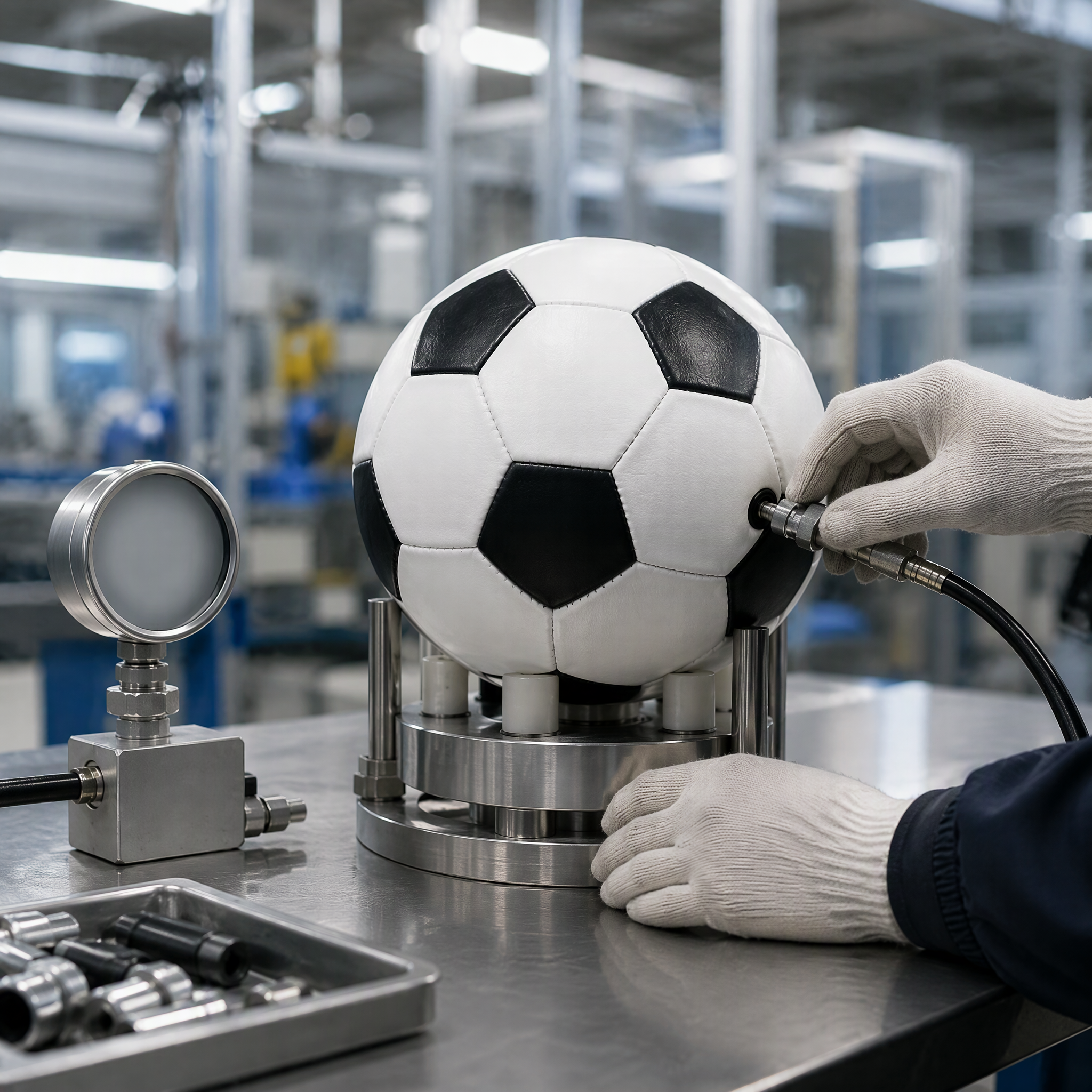
How to Control Soccer Ball Valve Performance in B2B Production
Reliable soccer ball valve performance protects both product quality and the buyer’s reputation. A valve is a small component, but it controls inflation, air retention, user experience, and the number of complaints received after delivery. In B2B production, soccer ball valve performance must be managed from component selection through final testing, because a visually perfect ball can still fail if the valve seat, stem, or bonding process is inconsistent.
What buyers should define before sampling
The first step is to write a valve specification that matches the product’s intended use. A school training ball, a retail recreational ball, and a competition model may not require exactly the same valve construction. Discuss stem material, valve dimensions, sealing behavior, compatible bladder material, inflation pressure, and expected storage conditions. A factory cannot control soccer ball valve performance when the purchase order simply says “standard valve.”
Buyers should also define how the valve is positioned. The opening needs to be accessible without creating a weak area in the panel or bladder. A clear position tolerance helps the assembler and makes factory inspection more objective. If a printed mark or panel seam must align with the valve, include that relationship in the approved drawing.
Valve materials and the bladder connection
The valve and bladder operate as one system. Rubber, butyl, or synthetic bladder materials have different elasticity and bonding characteristics. If the valve surface is not compatible with the bladder compound, the joint may leak slowly or separate under repeated inflation. A supplier should validate the adhesive, curing time, temperature, and insertion force rather than relying on visual judgment alone.
Temperature is an important variable. Materials may become stiffer in a cool warehouse and softer in a hot production room. A stable soccer ball valve performance program therefore controls storage and assembly conditions where possible. It also identifies whether valves are preconditioned before insertion. Records of material batch numbers make it easier to investigate a leak pattern later.
Common causes of poor soccer ball valve performance
Misalignment and damage
A valve that is tilted can make inflation difficult and place uneven stress on the surrounding bladder. Tools that are too sharp, dirty, or poorly calibrated may damage the stem during insertion. The factory should use a defined fixture or technique and train operators to reject components with cuts, burrs, or deformation.
Insufficient bonding
Adhesive contamination, incorrect coverage, or inadequate curing can create a slow leak that is not obvious during a short visual check. The process sheet should specify adhesive type, application amount, open time, and curing conditions. If production speed changes, the factory should confirm that the bonding window remains effective.
Overinflation during testing
Testing at a pressure above the approved range can mask a weak seal or create unnecessary stress. Use calibrated gauges and record both the initial pressure and the reading after the hold period. Consistent methods are more useful than aggressive tests that are impossible to reproduce.
A practical inspection sequence
For incoming inspection, sample valves from each component lot and check dimensions, stem finish, and hardness against the approved reference. During assembly, inspect valve position before the cover is closed. After inflation, listen and feel around the valve area for immediate leakage, then hold the ball for a defined time. A pressure-drop test should be paired with immersion or solution testing when the product specification allows it.
To assess soccer ball valve performance under use conditions, repeat inflation and deflation on a controlled sample. Record whether the needle enters smoothly, whether the stem remains centered, and whether air escapes when the needle is removed. This is particularly useful for products supplied to academies, rental programs, or schools where the same ball may be inflated many times.
Controls for export and repeat orders
Shipping can expose weaknesses that were not visible at the factory. Changes in temperature, container pressure, and long storage periods may affect air retention. Export buyers should ask for pre-shipment samples from the actual lot, not only a development sample. Document the valve supplier, component batch, inspection date, gauge calibration, and test result.
When a repeat order is placed, compare current soccer ball valve performance with the approved first-order baseline. Do not substitute a similar-looking valve without written approval. If a component becomes unavailable, request a new validation sample and repeat air-retention testing. A controlled change is faster and safer than solving a customer complaint after thousands of balls are in distribution.
Questions to ask a supplier
- Which valve and bladder combinations have been validated together?
- What pressure and hold time are used for final inspection?
- How are gauges calibrated and how often are they checked?
- What tolerance is allowed for valve position and stem condition?
- Can the factory trace a valve issue to a component lot?
Conclusion
Strong soccer ball valve performance comes from a controlled system, not a single leak test. Define the component, match it to the bladder, standardize insertion and bonding, and verify air retention under repeat-use conditions. With clear records and change control, buyers can protect product reliability across exports and future orders. Treat soccer ball valve performance as a measurable manufacturing requirement, and a small component will support a much stronger product line.