
 EN
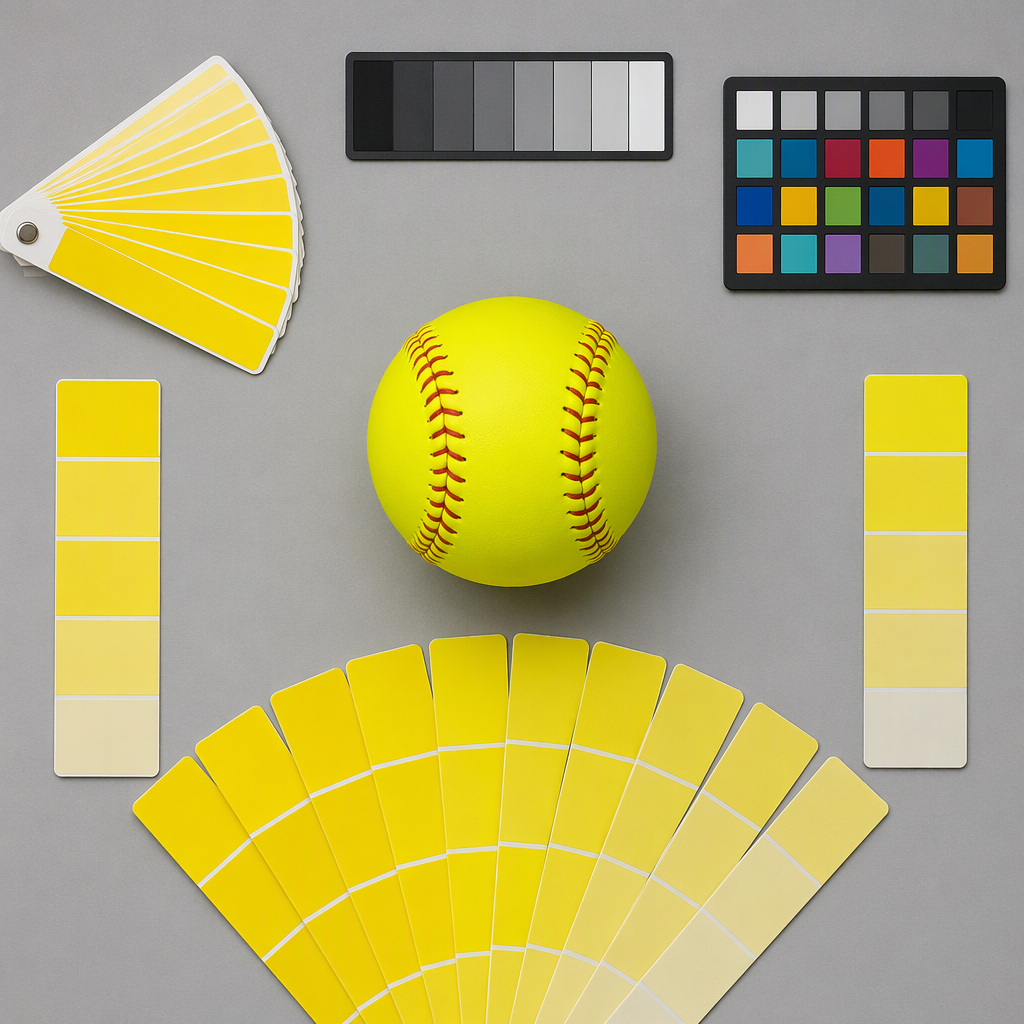
Softball Color Standards for School and League Orders
Softball color standards help buyers control visibility, compliance, branding, and consistency across a large procurement program. A school may require a recognizable color for training, a league may specify a competition color and finish, and a government order may demand exact documentation for every batch. Because color changes with material, lighting, coating, and print process, softball color standards should be physical, documented, and reviewed on the finished ball.
Identify why the color matters
First determine whether the color is required for visibility, league identification, safety, branding, or a purchasing specification. A bright optic color for training may need to remain visible under gym lights and outdoor shade. A league ball may need to match an established standard without excessive gloss. A government or school tender may require samples, lab data, or approved color codes.
Write the requirement in a way that a factory can inspect. Include base cover color, thread color, logo colors, gloss or matte level, and any printing or stamping. A phrase such as “bright yellow” is open to interpretation and can produce unnecessary disputes.
Use physical references correctly
Provide a current color chip, official sample, or recognized standard reference. Digital images should support artwork review, not replace physical approval. Store the reference away from sunlight, heat, moisture, and dirt. Identify it with a version number and approval date.
Color appearance depends on the substrate. A coated synthetic cover may look different from leather, while a glossy finish can make a shade appear more saturated. Request a strike-off on the actual softball material and inspect it under agreed lighting before approving the full sample. These checks make softball color standards practical rather than purely digital.
How softball color standards move from swatch to ball
Artwork and digital proof
Check logos, text, proportions, and placement in the digital proof. Confirm which colors are expected to match exactly and which can be adjusted for production. Assign a file version so obsolete artwork is not reused.
Material strike-off
Review a printed or coated swatch on the final substrate. Compare color under neutral light and, when relevant, under the lighting used by schools or venues. Note gloss, texture, opacity, and the effect of the cover backing. Record any approved tolerance.
Finished-ball approval
Inspect the inflated ball because curvature, seams, stitching, and surface treatment alter perception. Check color across several panels, near seams, and around logos. Rotate the ball and compare it to the master. Approve the actual production method, not only a lab swatch.
Production color control
Color can shift with pigment batch, ink viscosity, coating thickness, curing, machine settings, and material lot. The factory should inspect first-off production and retain reference panels from the lot. Inspectors should use the same light source and compare against the approved standard rather than relying on memory. Consistent softball color standards help teams make the same decision across batches.
If instrumental readings are used, define the device, measurement location, calibration, and acceptable Delta E range. Measurements support but do not replace visual review, especially when texture and gloss affect the customer’s perception. Segregate out-of-tolerance balls and document the decision.
Requirements for public-sector orders
Government and school programs may require a sample approval file, compliance statement, batch label, or inspection certificate. Prepare these documents before production. Make sure the color code in the file matches the product, carton, invoice, and tender submission. If an exception is approved, record it with the authorizing party. Keep the softball color standards reference in the same controlled file.
For league programs, confirm whether the ball must meet a published equipment rule. A color that looks correct may still fail if finish, logo placement, or visibility requirements differ. Ask the buyer for the current rule reference rather than relying on an old season’s specification.
Reorders and multiple factories
Send the physical master with every new supplier or factory if allowed by the program. Maintain a controlled color library and replace references that have faded. A Pantone name alone does not guarantee identical results across materials and machinery.
Compare reorder samples with the original baseline and record any intentional change. When several factories produce the same softball, use the same substrate, color reference, lighting, and tolerance wherever possible.
Conclusion
Reliable softball color standards connect the reason for the color, a physical reference, the actual substrate, finished-ball approval, and production inspection. This method supports schools, leagues, and government buyers that need clear evidence and repeatable results. Document the standard carefully, and color becomes a controlled product requirement rather than a subjective argument.
Making color approval easy to audit
Place the color reference, signed sample, measurement record, and production photograph in one approval file. Identify who approved the shade and which tolerance was applied. At receiving, inspect cartons from different batches under the agreed light and record exceptions before distribution. This process is especially valuable when a government or league program has a formal complaint window. Clear softball color standards protect the buyer because every decision can be traced to a physical sample and dated approval.