
 EN
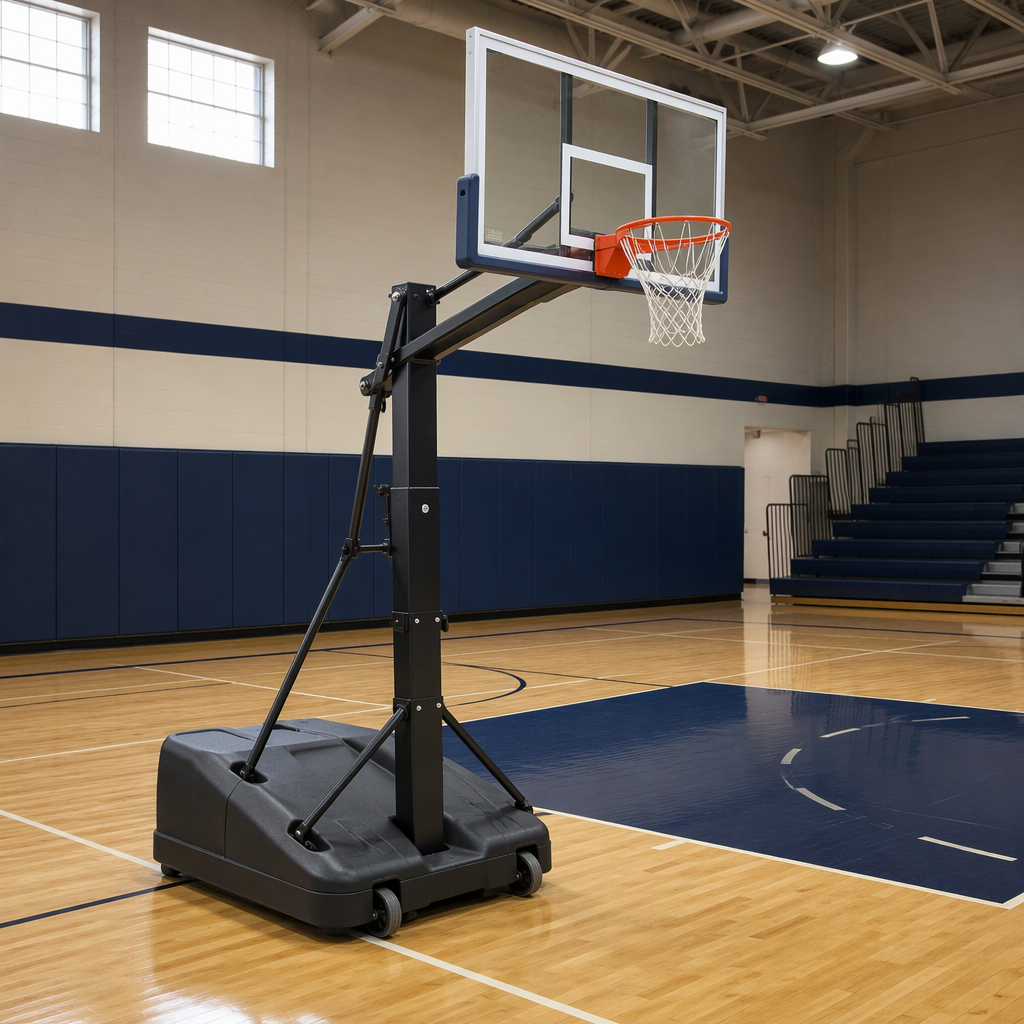
Basketball Stand Base Design: Stability for Portable and Fixed Systems
Basketball stand base design determines how confidently a system stays upright during play, transport, adjustment, and storage. Portable stands need a practical balance between ballast and maneuverability, while fixed systems depend on anchoring and site preparation. For B2B buyers supplying schools, clubs, or outdoor courts, the base should be evaluated as a safety-critical structure rather than as a molded or welded shape chosen mainly for appearance.
Start with the installation and use profile
Clarify whether the stand will be portable, semi-permanent, or fixed. Identify court surface, wind exposure, playing level, rim height, backboard size, expected dunking or hanging loads, and how often the unit will be moved. A base that performs well in a sheltered school gym may not be suitable for an outdoor court exposed to gusts or uneven paving.
Ask who will move and maintain the equipment. Schools may need large wheels and a controlled tipping direction, while clubs may prefer a heavier base that is rarely relocated. Basketball stand base design should reflect the people operating it, not only the strongest person in the product demonstration.
Ballast and center of gravity
Portable systems rely on ballast, geometry, or both to resist tipping. Water or sand compartments can reduce shipping weight, but they require secure caps, leak control, and clear filling instructions. Steel or concrete ballast provides mass but increases freight cost and handling demands. The base shape should keep the center of gravity low and distribute load across a stable footprint.
Consider the stand at different extension heights. Raising the backboard moves the center of gravity and increases the overturning moment. The supplier should specify the approved ballast amount and test the system in its highest and most demanding configuration. Never assume a base that feels stable at minimum height remains stable at full adjustment.
Footprint, wheels, and frame strength
A wide footprint can improve stability but may create a trip hazard or restrict court clearance. Rounded edges, protected corners, and a controlled wheel position help reduce injuries during movement. Wheels should support the loaded unit, roll over the intended surface, and lock or lift clear during play.
Inspect welds, brackets, bolts, and connections between the base and upright. The frame should resist bending and fatigue under repeated adjustment and impact. Ask for material thickness, coating, fastener grade, and corrosion protection. A good basketball stand base design is not complete if the attachment hardware is underspecified.
Testing for stability and durability
Perform tipping and load tests with the final backboard, rim, pole, ballast, and adjustment setting. Use a level reference surface and record the direction, force, and result. Repeat after assembly, transport simulation, and adjustment cycles. Inspect cracks, permanent deformation, loose hardware, wheel damage, and ballast leakage.
Outdoor units need corrosion and weather checks. Water can enter seams or ballast compartments, while ultraviolet exposure can weaken plastics. Test drains, caps, coatings, and labels. If the base includes a molded reservoir, inspect for warping and stress around the fill opening.
Safety instructions and packaging
Provide clear assembly, ballast, movement, anchoring, and maintenance instructions. State when the stand must not be moved, how wheels should be positioned, and whether the rim is designed for hanging. Warning labels should remain legible after outdoor exposure.
Packaging must protect the base and hardware without creating a box too heavy for safe handling. Separate sharp brackets and secure loose parts. Include a hardware list and inspection checklist so the buyer can verify the system during receiving.
Choosing portable or fixed value
Portable designs offer flexibility for multi-use courts but require users to follow ballast and movement instructions. Fixed systems can provide strong performance where the site is permanent, but installation quality and foundation design become critical. Compare lifetime maintenance, freight, installation, storage, and user skill rather than focusing only on the purchase price.
Conclusion
Reliable basketball stand base design balances footprint, ballast, center of gravity, frame strength, wheels, anchoring, and user safety. Test the complete system at its most demanding setting and document the approved hardware and instructions. For B2B buyers, this engineering-first approach supports safer installations, fewer service calls, and a basketball system that remains stable throughout its working life.
Site inspection after delivery
After receiving a stand, inspect the base, wheels, ballast chamber, fasteners, and protective coating before assembly. Confirm that the supplied instructions match the model and that no hardware was damaged in transit. Once installed, test movement on the actual court and recheck stability after the first use period. A receiving checklist creates useful evidence if a part is missing or bent. It also helps the buyer confirm that basketball stand base design assumptions remain valid in the real installation.
Ballast verification and maintenance handover
Before site acceptance, the buyer should verify the actual ballast quantity rather than relying on a supplier statement or a visual check. Record the fill material, measured volume or weight, cap condition, drain position, wheel-lock operation, and the final adjustment height. For water-filled bases, check for leakage after filling and confirm that freezing or long storage will not damage the reservoir. For sand, steel, or concrete ballast, confirm that the mass is secured and cannot shift during movement. The handover package should identify inspection intervals, replacement parts, approved cleaning methods, and the person responsible for each check. Photograph the assembled base and fasteners at acceptance, then repeat a short stability and hardware inspection after the first period of use. This evidence helps facilities teams maintain the intended basketball stand base design performance and gives B2B buyers a clear record for service decisions.