
 EN
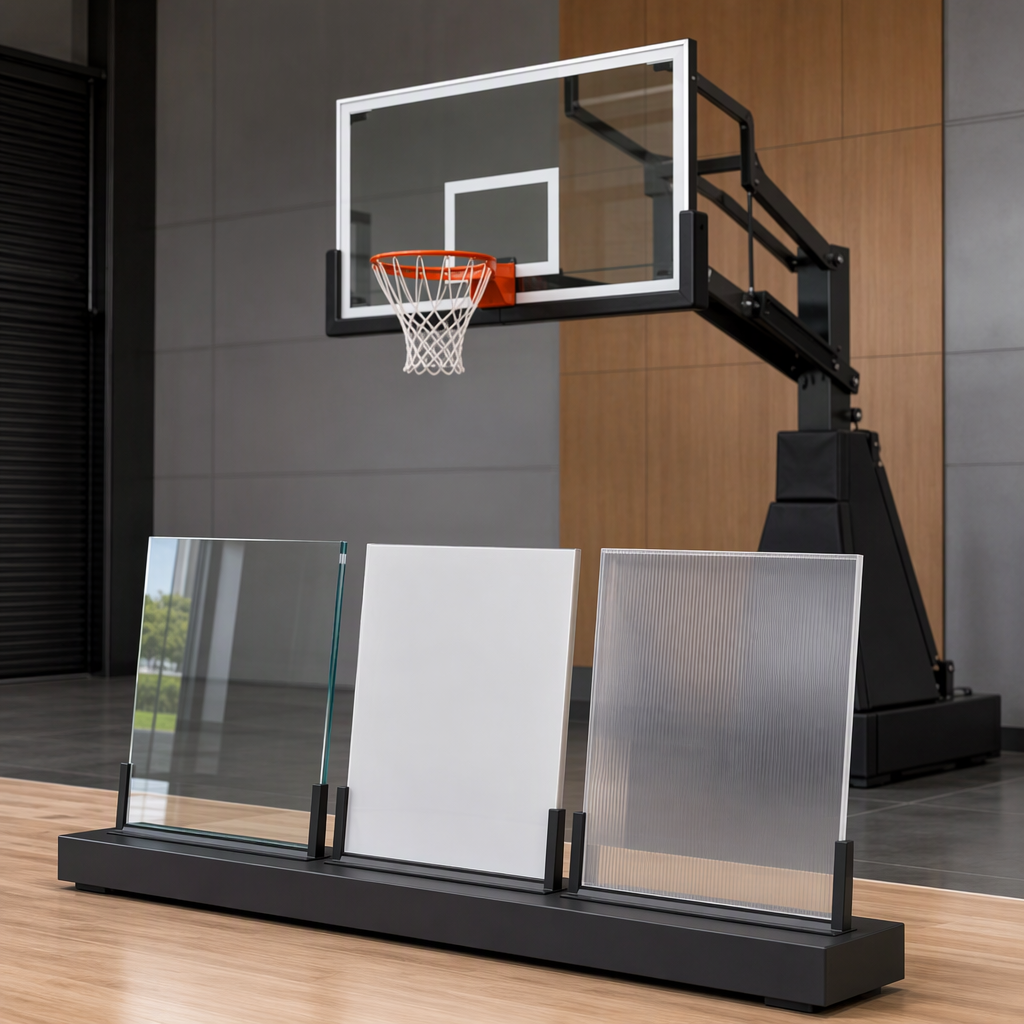
Choosing Basketball Backboard Materials for Schools, Clubs, and Outdoor Courts
Basketball backboard materials affect rebound, visual quality, impact resistance, weight, weather performance, and installation cost. A school gym, club competition venue, and exposed outdoor court may need different material priorities. For B2B buyers, the right choice is not simply the thickest or most transparent board. Basketball backboard materials should be matched to the frame, rim load, location, maintenance capacity, and expected service life.
Define the court before selecting material
Identify whether the system is indoor, covered outdoor, or fully exposed. Confirm playing level, backboard size, rim type, support structure, installation height, wind exposure, and transport constraints. A light board may simplify portable construction, while a heavy board may require a stronger frame and more secure anchoring.
Schools often value impact resistance, safe edges, easy cleaning, and predictable cost. Clubs may need a refined rebound and clear visual appearance. Outdoor buyers may prioritize weathering, vandal resistance, and replacement availability. Put these priorities in order before comparing quotations.
Common backboard materials
Tempered glass
Tempered glass is associated with a crisp rebound and professional visual appearance. It is heavier and requires careful edge protection, mounting, and transport. Buyers should confirm glass thickness, tempering quality, edge finish, frame support, and safety treatment. Crates and loading procedures deserve extra attention because damage may occur before installation.
Acrylic
Acrylic provides transparency and lower weight than glass for many systems. It can be a practical choice for schools and clubs, but surface scratching, yellowing, and impact behavior must be evaluated for the environment. Specify thickness, UV resistance, support design, and acceptable optical variation.
Polycarbonate
Polycarbonate is valued for impact resistance and can suit demanding outdoor or school applications. Its rebound and visual appearance differ from glass, and it may require protection from scratching and ultraviolet exposure. Confirm coating, thickness, mounting hole design, and long-term weathering results.
Solid or composite panels
Solid plastics and composite materials can offer economical durability and design flexibility. They should be assessed for rigidity, rebound consistency, thermal movement, color stability, and frame compatibility. A lower-cost panel is not a good value if it bends, fades, or requires frequent replacement.
Rebound and structural tests
Test the backboard with the intended rim, support, fasteners, and playing surface. Rebound should be measured at defined locations with consistent ball pressure and impact method. Inspect vibration, noise, flex, permanent deformation, and cracking after repeated impact.
Structural tests should reflect the rim load and any permitted use. Confirm how the system responds to accidental contact or weather forces. The factory should state whether a rim is designed for hanging and ensure the backboard, frame, and hardware share the same rating.
Outdoor weathering and maintenance
Outdoor basketball backboard materials face ultraviolet radiation, rain, heat, cold, dust, and cleaning chemicals. Check yellowing, haze, fading, cracking, coating adhesion, and fastener corrosion after conditioning. Design drain paths so water does not collect around mounting holes or frames.
Provide care instructions for cleaning and scratch prevention. Avoid abrasive tools on transparent panels unless approved. Schools and municipalities benefit from a maintenance schedule that identifies fastener checks, surface cleaning, and inspection after severe weather.
Packaging and installation
Backboards are vulnerable to edge impact and flex during transit. Specify crate dimensions, corner protection, separators, lifting points, and storage orientation. Inspect boards on arrival before removing protective film. Installation instructions should identify hole pattern, torque, support requirements, and safe lifting procedures.
Cost over the service life
Compare purchase price with frame reinforcement, freight, installation labor, maintenance, replacement risk, and expected lifespan. Glass may justify its cost in a premium club venue, while polycarbonate or acrylic may offer better practical value for a school or exposed court. Use samples and test reports to support the decision.
Comparing supplier evidence
When reviewing offers, ask for a material sample, a rebound report, outdoor weathering information, and photographs of installed mounting points. Confirm that test results apply to the quoted thickness and not to a different laboratory sample. This evidence helps a purchasing committee compare basketball backboard materials on service life and safety rather than on transparency or catalog appearance alone. It also creates a useful baseline for warranty discussions.
Conclusion
Selecting basketball backboard materials requires a whole-system view of rebound, impact, weather, weight, installation, and maintenance. Compare glass, acrylic, polycarbonate, and composite options against the actual court environment and rim load. A documented material choice helps B2B buyers deliver safer, more durable basketball systems and avoid unexpected replacement costs.
Procurement questions worth documenting
Ask the supplier for material thickness, UV rating, rebound test data, hole-pattern tolerance, edge treatment, and recommended cleaning method. Confirm whether the quoted board includes frame, protective film, hardware, and crate. Request photographs of packaging and installation points before shipment. A documented comparison helps schools and clubs understand why one of the basketball backboard materials suits their court better than another and makes future replacement decisions faster.