
 EN
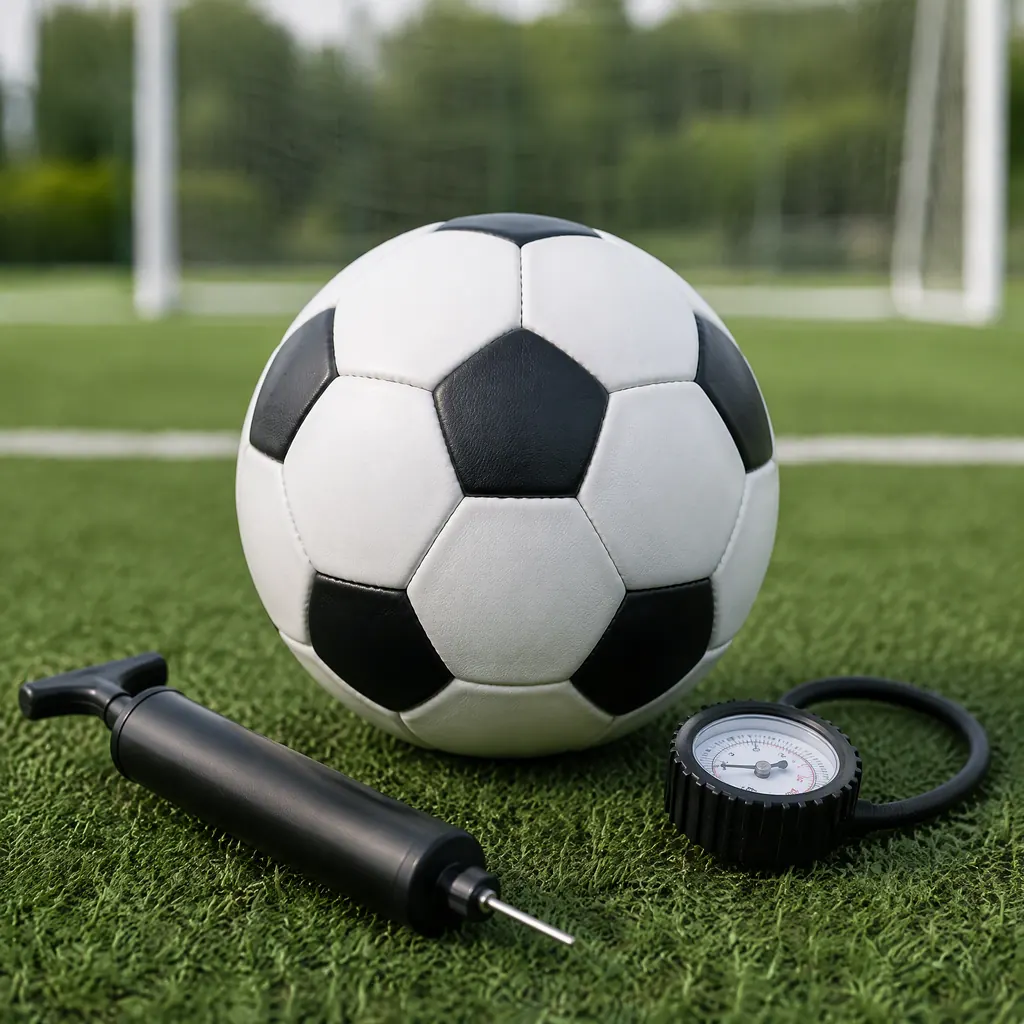
How to Choose a Soccer Ball Bladder for Training
The soccer ball bladder is the internal air chamber that gives a soccer ball its pressure, shape, and part of its response. It is hidden after assembly, so buyers sometimes focus on the cover and overlook the bladder specification. For training products, that can lead to avoidable complaints about air loss, inconsistent feel, or difficult maintenance.
A suitable soccer ball bladder depends on the training environment, price position, inflation routine, storage conditions, and expected user behavior. The main commercial choices often include butyl-based bladders, latex-based bladders, and constructions that combine different materials or reinforcement layers. Each option should be reviewed as part of the full ball rather than selected in isolation.
What the bladder controls
The soccer ball bladder stores air and supports the ball’s roundness. Its material, thickness, elasticity, valve, and relationship with the lining affect inflation retention, rebound, touch, and shape stability. The bladder does not determine performance alone. Cover, foam backing, panel construction, and assembly quality can change the result significantly.
A buyer choosing a soccer ball bladder should ask the factory to identify the bladder material and construction, not only the ball’s outside cover. Request information about the valve, bonding or welding method, reinforcement, and incoming inspection. If a supplier is unable to describe the bladder clearly, the specification may be too general for consistent sourcing.
Butyl-based bladders
Butyl-based bladders are widely used in training and recreational soccer balls because a butyl bladder soccer ball can provide practical inflation retention and predictable manufacturing behavior. They are often considered a useful choice for products that will be stored, distributed, and used by a broad range of players.
For buyers, the value of a butyl bladder soccer ball is not a simple promise of “no air loss.” All inflatable products require maintenance, and retention depends on material formulation, wall construction, valve quality, temperature, and storage. Review inflation retention using a documented method and compare samples after handling, not only immediately after inflation.
Butyl-based systems may feel firmer or less elastic than some latex-oriented constructions, depending on the design. That can be suitable for a durable training range, especially when consistent maintenance and broad usability matter more than a highly responsive touch.
Latex-based bladders
Latex-based bladders are valued in some soccer ball designs for their elasticity and responsive feel. A latex bladder football construction may provide a lively response and a soft, natural sensation when properly matched with the cover and lining.
The trade-off is that latex-oriented constructions may require more frequent inflation attention, and their behavior can be more sensitive to storage and use conditions. This does not make them unsuitable for training. It means the buyer should align the bladder with a user who is prepared to check pressure regularly and follow care guidance.
When considering a latex bladder football construction, ask about material consistency, odor, valve compatibility, and storage recommendations. If the product is intended for institutions with limited maintenance routines, the commercial team should decide whether the performance benefit justifies the added care requirement.
Hybrid and reinforced options
Some suppliers offer hybrid soccer ball bladder systems or reinforcement layers intended to balance response, retention, and shape stability. These constructions can be useful when a product needs a particular feel while maintaining practical training performance. They also require a more detailed specification because “hybrid” can mean different things between factories.
Ask for a cross-section description, material identification, and sample test data. Confirm whether the reinforcement is part of the bladder, lining, or both. Check how the bladder interacts with the selected panel construction and whether the supplier has experience repeating the design in production quantities.
Match the bladder to training conditions
A training soccer ball may be used on natural grass, artificial turf, indoor flooring, or hard ground. A hard-ground program can create more impact and abrasion, while indoor use may place more emphasis on controlled rebound and surface feel. The bladder should be evaluated with the cover and construction intended for that surface.
Climate also matters when selecting a soccer ball bladder. Heat can increase internal pressure, while cold may change material flexibility and perceived firmness. Humidity can affect storage and the condition of external materials. If the product will be distributed across different regions, conduct conditioning checks that represent the expected supply chain and use environments.
Storage practices deserve attention. Balls kept compressed, exposed to heat, or stored for extended periods may behave differently from freshly produced samples. Provide care instructions that cover inflation, deflation, cleaning, and storage, and make sure the packaging does not encourage damaging practices.
Inflation retention and valve quality
The valve is a small component with a large impact on soccer ball bladder performance and user satisfaction. Inspect valve centering, insertion, sealing, and compatibility with common pumps. The valve should allow practical inflation without excessive resistance and should not leak after repeated use of the needle.
Inflation retention testing should isolate soccer ball bladder and valve performance as far as possible. Record starting pressure, conditioning period, temperature, and measurement method. Test multiple samples from the production lot and investigate variation rather than relying on a single favorable unit.
Also examine the ball after repeated inflation and deflation. A valve that performs well once may show leakage or damage after routine training maintenance. A factory should define how it controls valve insertion and how it rejects suspect components.
Feel, rebound, and roundness
When the soccer ball bladder is inflated to the agreed condition, assess firmness, first touch, rebound, and response after impact. Compare the sample with the approved reference using the same cover and lining. A bladder change can make a familiar product feel noticeably different even when outside dimensions remain within tolerance.
Check roundness at several orientations and after the ball has rested. An uneven bladder, incorrect lining tension, or assembly error can create a bulge or flat area. These defects may become more visible when the ball is overinflated or stored improperly, so prevention at the factory is preferable to user troubleshooting.
Training programs using a soccer ball bladder should also plan a simple pressure-maintenance routine. Provide the recommended inflation method, advise users to inspect the valve, and explain how to store the ball between sessions. These soccer ball bladder instructions do not replace a sound bladder, but they help customers obtain the intended feel and reduce complaints caused by incorrect handling.
B2B sourcing checklist
- Identify the bladder material, construction, valve, and reinforcement details.
- Match the choice to playing surface, climate, storage, price position, and maintenance habits.
- Request physical samples made with the proposed production components.
- Test retention, valve performance, roundness, rebound, feel, and repeated inflation.
- Confirm incoming inspection and lot traceability for bladders and valves.
- Document approved pressure, care guidance, packaging, and acceptance limits.
Conclusion
Choosing a soccer ball bladder for training is a balance of feel, retention, durability, maintenance, and cost. The soccer ball bladder should be specified with the cover, lining, valve, inflation guidance, and quality controls. Butyl-based, latex-based, and hybrid options can all be appropriate when the product brief and quality system support them. The most reliable decision comes from testing a complete ball under realistic conditions and requiring the factory to document the bladder, valve, and assembly controls. That turns an invisible component into a manageable part of the B2B specification.