
 EN
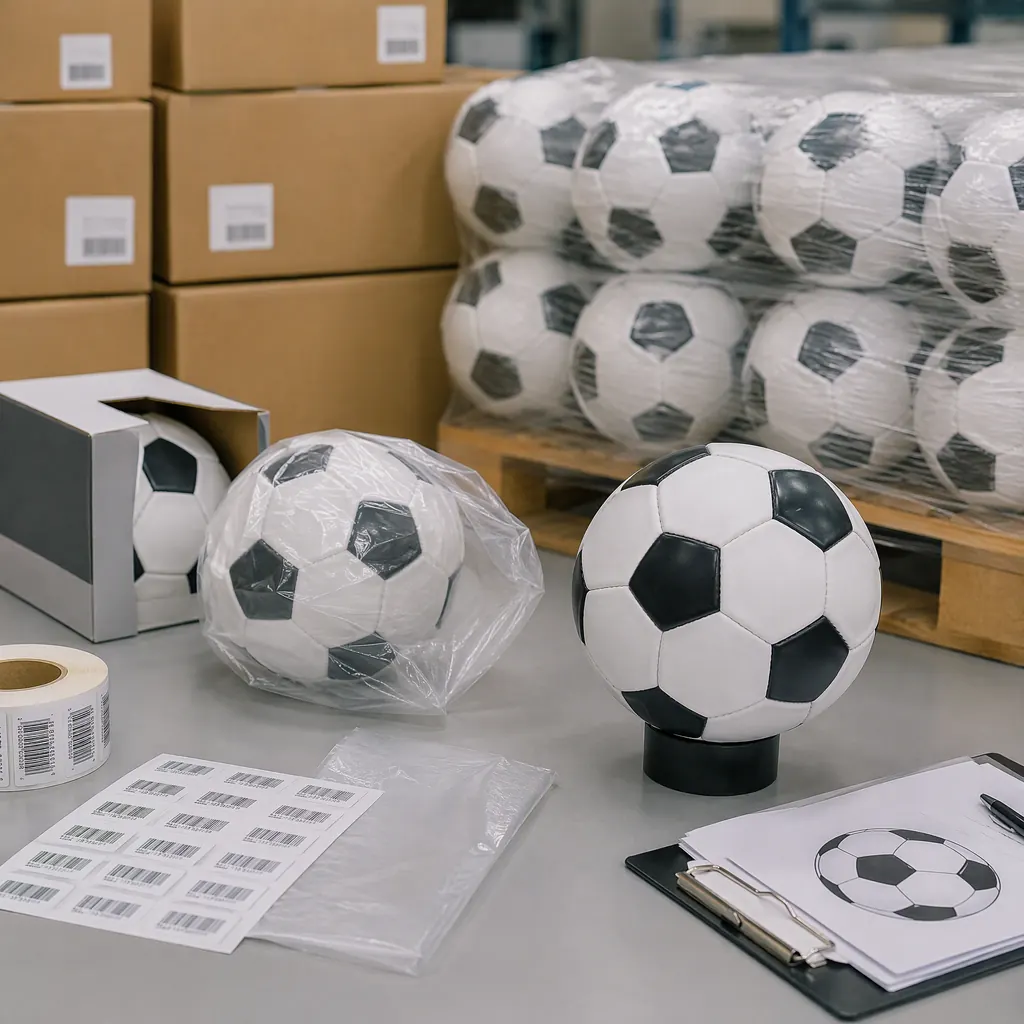
Custom Soccer Balls: A B2B Production Guide
Custom soccer balls can support a sports brand, club, school program, event, distributor, or promotional campaign. The most successful custom soccer balls projects begin with a production brief rather than a logo file. Buyers need to define how the ball will be used, how it should feel, what construction is appropriate, and how the finished product will be inspected.
Customization of custom soccer balls involves more than printing artwork on a standard product. For custom soccer balls, changes to panel layout, cover, lining, bladder, texture, color, and packaging can affect performance, cost, minimum order requirements, and lead time. A structured development process helps the buyer protect the brand while keeping the factory’s manufacturing responsibilities clear.
Start with the commercial use case
For custom soccer balls, describe the intended customer and playing environment first. A school training program may prioritize rugged use, easy maintenance, and a controlled landed cost. A club may need a repeatable team ball with clear branding. A retail brand may require a more refined surface and packaging presentation. Promotional orders may focus on visual impact and delivery coordination.
For custom soccer balls, also identify the expected playing surface, user level, climate, sales channel, and target price position. Confirm the custom soccer balls brief These details help the factory recommend a cover category, construction method, bladder, and packaging format. Without them, a supplier may quote a visually attractive product that is unsuitable for the end user.
Build a complete technical specification
The technical brief for custom soccer balls should cover size category, circumference, weight, construction, panel material, backing, bladder, valve, surface finish, color standards, artwork, and packaging. State the intended performance characteristics in terms that can be evaluated. For example, “consistent touch for training use” should be connected to a sample review and agreed functional checks.
For custom soccer balls, define tolerances and acceptable cosmetic conditions. These custom soccer balls controls A buyer should decide in advance how to treat minor print variation, small surface marks, seam differences, or packaging scuffs. This does not mean accepting poor quality. It means giving the inspection team an objective standard instead of leaving every decision to personal judgment.
For custom soccer balls, keep the specification version-controlled. A custom soccer balls change to artwork, material, or construction after sample approval should be recorded and reapproved. This is important when several departments or external agencies are involved in a branded order.
Prepare artwork for a curved product
Artwork for custom soccer balls must account for panel shape, seam locations, distortion, and print limitations. A flat design file can look different after it is divided across panels and formed into a sphere. Provide editable artwork, color references, logo usage rules, and a clear indication of which elements must remain aligned.
For custom soccer balls, ask the factory to provide a layout proof that shows panel boundaries and artwork placement. Review small text, thin lines, gradients, and registration points carefully. Some details may require adjustment to remain readable after printing and assembly. A physical sample is strongly recommended when brand presentation is important.
For custom soccer balls, confirm who owns final artwork approval. Keep the custom soccer balls artwork record. Production for custom soccer balls should not begin based on an informal message or an unmarked image. Keep the custom soccer balls approval The approved file, color reference, and sample should be linked to the purchase order or production record.
Select construction and materials
Stitched, thermal bonded, and hybrid constructions each have a place in custom soccer balls B2B sourcing. Stitching may offer flexibility and a familiar training-ball feel. Thermal bonding can support a clean seam appearance and a modern surface. The best choice depends on use, target cost, supplier capability, and required performance.
For custom soccer balls, cover selection should consider texture, softness, abrasion, water handling, and graphic adhesion. A softer surface may improve touch but require more careful coating and handling. A rugged cover may be suitable for frequent training but may not deliver the same premium feel. The bladder influences inflation retention and response, while the lining helps maintain shape and balance.
For custom soccer balls, request a material stack description and a sample using the proposed production components. Confirm A factory may use different materials for development and mass production unless the specification prevents that substitution.
Sampling and approval gates
Use staged approvals for custom soccer balls. A concept review can confirm design direction. A physical development sample can validate size, panel layout, feel, and artwork. A pre-production sample should confirm the final materials, colors, construction, and packaging. The buyer should not treat a simple digital rendering as approval for a production run.
Test custom soccer balls in the environment where the ball will be sold or used. Review inflation, touch, grip, rebound, shape, flight, seam behavior, and visual appearance. Ask multiple intended users for structured feedback, but keep the final decision tied to the written specification rather than popularity alone.
For custom soccer balls, seal or digitally archive the approved reference sample. Record the date, material details, artwork version, and any agreed exceptions. This reference becomes an important tool during in-line and pre-shipment inspection.
Control production and quality
Before bulk production of custom soccer balls, confirm raw-material inspection, panel cutting, printing, assembly, bladder installation, inflation, and final inspection procedures. A factory should be able to identify the production batch and explain how it prevents artwork mix-ups or material substitutions.
For custom soccer balls, in-line checks can identify problems while correction is still practical. Record the custom soccer balls inspection Review color, print registration, panel alignment, seam quality, valve position, roundness, and surface finish. Final inspection should include sampling for measurements, inflation retention, appearance, packaging, and other agreed tests.
For custom soccer balls, define the action for a failed inspection. The custom soccer balls supplier may sort, rework, replace, or hold units depending on the defect. The buyer should receive a report that describes the issue, quantity affected, corrective action, and reinspection result.
Packaging, logistics, and compliance
Packaging for custom soccer balls must protect the ball’s shape, surface, and artwork through handling and transport. For custom soccer balls, confirm whether units ship inflated, partially inflated, or flat, and check that the chosen method does not create avoidable creasing. Carton labels, barcodes, care instructions, and country-of-origin information should match the destination-market requirements.
Compliance requirements for custom soccer balls vary by market and customer. Review applicable chemical, labeling, packaging, and product-safety expectations with the responsible importer or compliance professional. Do not rely on a generic claim that a product is certified if the relevant standard, scope, and documentation have not been verified.
Plan for repeat orders
A custom soccer balls program becomes more efficient when repeatability is designed from the beginning. For custom soccer balls, retain the approved sample, technical specification, artwork, color references, and test records. Identify approved suppliers for key components and define what changes require renewed approval.
For custom soccer balls, review customer feedback and defect trends after each shipment. Keep the custom soccer balls record. If a surface wears differently than expected or packaging causes scuffing, update the specification and corrective-action record. Continuous improvement is especially valuable when a successful pilot becomes a recurring program.
Commercial planning for custom soccer balls should also account for seasonal demand, artwork approval time, component availability, inspection capacity, and custom soccer balls scheduling. A factory may be able to make a sample quickly but require more time to secure a special cover or coordinate several customized colors. Discuss the full critical path early, then build a launch schedule that includes review time instead of treating production as the only milestone.
Conclusion
Custom soccer balls production is a coordinated process involving commercial strategy, design, materials, engineering, quality, logistics, and custom soccer balls planning. B2B buyers can reduce risk by defining the use case, approving a complete material system, validating artwork on a physical sample, and controlling changes through production. A clear reference and inspection plan allows the factory to reproduce the intended product while giving the buyer evidence that the finished order supports the brand promise.