
 EN
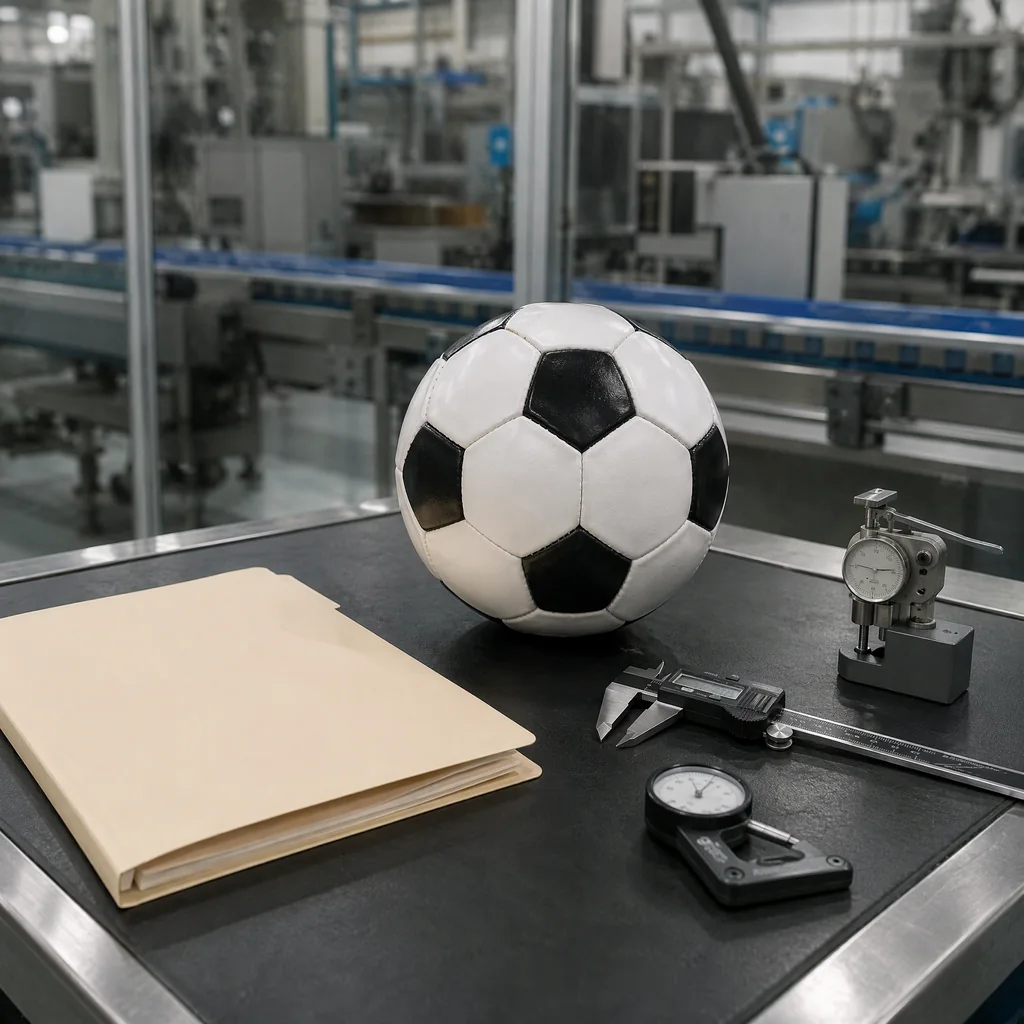
Soccer Ball Factory Records: Samples, Inspection Reports, and Repeat-Order Control
Good soccer ball factory records turn a one-time product approval into a repeatable B2B supply program. Buyers often keep a sample in a showroom, but a physical ball alone does not explain its material, construction, testing, or packaging. Soccer ball factory records connect the approved sample to measurable specifications, inspection evidence, and controlled changes so that a reorder months later can be compared with the original shipment.
What belongs in the approval file
Start with a master product specification. It should identify ball size, target weight, circumference, pressure range, bladder and valve, cover material, backing, panel layout, seam method, color references, decoration files, and packaging configuration. Include tolerances, not only target numbers. Without tolerances, inspectors may interpret the same requirement differently.
Photographs are useful when they show valve position, seam intersections, logo placement, texture, and carton markings. Add a signed approval date, sample identification, and the names of the buyer and factory approvers. If a sample is approved with a written exception, record the exception clearly rather than relying on a conversation or an email thread.
Samples that support production control
A development sample proves that a concept is possible. A pre-production sample confirms that the final materials, artwork, and process can be used at scale. A golden sample represents the accepted result for in-line and final inspection. These samples should be labeled separately. Mixing them can lead a factory to compare production with an outdated prototype.
For soccer ball factory records to remain useful, keep a sealed reference sample when practical and photograph it before opening. Record its condition, inflation pressure, and storage date. If the surface changes naturally over time, keep notes so that an inspector does not reject a production ball for a difference caused only by aging of the reference.
Inspection data that buyers can use
Inspection reports should state the lot size, sample size, inspection date, inspector, equipment, and result. Typical checks include weight, circumference, roundness, rebound, air retention, valve accessibility, seam appearance, cover adhesion, print quality, and carton quantity. Record actual readings for critical measurements rather than writing only “pass.” A trend in weight or circumference may reveal a process shift before defects become widespread.
Define visual defect categories and acceptable limits. Examples include deep cuts, open seams, wrinkles, color variation, dirty marks, print misregistration, exposed backing, and valve damage. Use clear photographs for major and minor defects. A report that uses consistent language is easier for a purchasing team, third-party inspector, and factory supervisor to understand.
Material and process traceability
Request lot information for cover material, bladder, valves, adhesive, ink, thread, and cartons. The factory does not need to create unnecessary paperwork, but it should be able to connect a finished batch to its main inputs. This becomes important when a customer reports slow leakage, peeling print, or unusual surface wear.
Soccer ball factory records should also include process settings that affect performance, such as curing time, bonding conditions, stitching specification, inflation and deflation steps, and testing pressure. The exact level of detail depends on the product, but the record should allow a qualified manager to understand what changed if a result moves outside the approved range.
Controlling changes on repeat orders
Most repeat-order problems begin with an unrecorded substitution. A material supplier changes, a printing machine is replaced, or a panel file is updated without a new sample. Require the factory to notify the buyer before a change that could affect fit, feel, color, durability, air retention, or packaging. Classify changes as critical, major, or minor so that approval effort is proportional to risk.
Compare each reorder against the previous soccer ball factory records. Review material batches, test readings, nonconformities, corrective actions, and customer feedback. A short comparison table can show whether performance is stable. If the product is sold under a private label, maintain version numbers for artwork and packaging to prevent old files from returning to production.
Making records practical
Use a shared naming convention and store the specification, approvals, inspection reports, photos, and corrective actions in one controlled folder. Limit editing rights for approved documents. Train staff to record facts promptly and avoid rewriting reports after a dispute. Digital records are valuable only when they are complete, dated, and easy to retrieve.
Conclusion
Strong soccer ball factory records protect quality, communication, and reorder speed. Combine a detailed product specification with labeled samples, actual inspection readings, traceable materials, and formal change control. This evidence gives buyers confidence that the next production lot will match the approved ball and gives factories a fair, objective way to manage expectations.
Using records to improve purchasing decisions
Records are most valuable when purchasing teams use them to compare suppliers and forecast risk. Review defect rates, corrective-action speed, test variation, and the frequency of undocumented changes. A factory with slightly higher pricing may provide better value if its soccer ball factory records show stable performance and fewer claims. Share relevant findings with production and logistics teams, then update the specification when a recurring lesson becomes a formal requirement. This turns quality data into a practical tool for better sourcing decisions.