
 EN
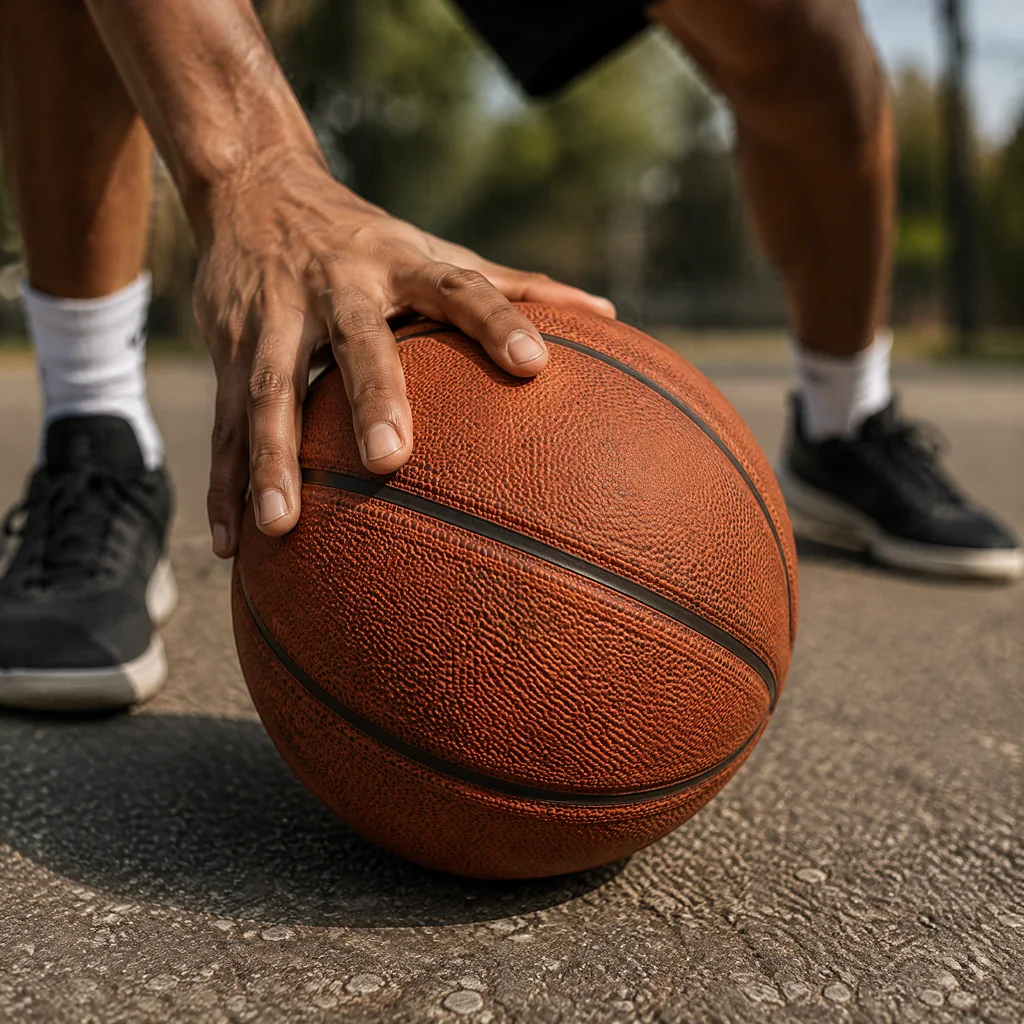
Basketball Cover Texture: Indoor, Outdoor, Training
Basketball cover texture directly affects grip, handling confidence, cleaning, and service life. A private-label buyer choosing balls for a polished indoor court should not automatically use the same finish for outdoor concrete or high-volume school training. The right basketball cover texture balances touch with resistance to abrasion, moisture, dirt, and repeated use. For B2B purchasing, define the basketball cover texture in a specification and demonstrate it on finished samples.
Match basketball cover texture to the court
Indoor hardwood is comparatively smooth and controlled, so players often expect a soft, responsive cover with reliable fingertip friction. Outdoor asphalt and concrete are harsher and can quickly wear a delicate surface, especially when the ball is dragged, kicked, or stored in dusty conditions. Training programs may need a versatile basketball cover texture that remains comfortable while surviving many users and frequent cleaning.
Ask where most units will be used, not merely how the product will be marketed. A ball labeled “all surface” still has practical limits. If an importer supplies schools, sports retailers, and community programs, separate basketball cover texture specifications may be more profitable than one compromise finish.
What creates a useful basketball cover texture?
Raised pebble and micro-texture
A raised pebble pattern increases contact points between the cover and the hand. Consistency is essential: peaks that are too sharp can feel uncomfortable, while shallow or irregular basketball cover texture may become slippery when dusty. The supplier should control embossing pressure, mold temperature, coating thickness, and material shrinkage.
Soft-touch synthetic leather
Soft-touch PU or synthetic leather can deliver a premium hand feel for indoor and training balls. It may include a foam backing that reduces impact harshness. Buyers should confirm recovery after compression, resistance to peeling, and compatibility with the selected adhesive and panel construction. A soft basketball cover texture should not be assumed to be fragile, but it needs appropriate testing.
Rubberized and outdoor finishes
Rubberized surfaces can tolerate more outdoor abrasion and are often easier to clean. They may feel firmer than indoor PU, and color or gloss can change with extended sunlight. Confirm that the formulation supports the expected temperature range and that the basketball cover texture does not transfer color onto hands or court surfaces.
Testing basketball cover texture beyond the first impression
Hand feel is useful but subjective. Use a panel comparison under the same lighting and ask several experienced users to handle inflated samples. Then test finished balls with controlled dribbling, passing, and shooting on the target court. Measure basketball cover texture grip after exposure to dust, light moisture, and the approved cleaning solution.
For an outdoor program, perform abrasion cycles on the actual cover. Inspect basketball cover texture loss, cracking, color fade, surface glazing, and exposed backing. For indoor programs, focus on repeated compression, sweat or wipe exposure, and the stability of the printed logo. Record ball pressure before each comparison because pressure changes handling and can conceal a texture problem.
Basketball cover texture and manufacturing consistency
Basketball cover texture must be consistent across panels and colorways. A dark pigment, metallic finish, or printed overlay can change friction. The factory should approve a master texture sample and identify acceptable limits for pebble height, gloss, color, and surface defects. In-line inspectors should check panels before assembly, while final inspectors evaluate the completed sphere.
Pay attention to seams. A basketball cover texture may appear uniform in the center of a panel but flatten near a stitched edge or wrinkle around a complex joint. Inspect high-contact areas and the transition between printed and unprinted sections. If the ball uses different materials on different panels, confirm that touch and wear remain commercially acceptable.
Cleaning and storing basketball cover texture
School and rental customers often wipe balls after use. Specify a mild cleaning method and test it before printing instructions. Strong solvents, rough brushes, and excessive soaking may damage some finishes. Packaging should keep the basketball cover texture clean and avoid prolonged pressure that leaves marks or flattens the surface.
Storage conditions also influence surface feel. Heat can soften coatings, while cold may make them stiff temporarily. Advise distributors to keep stock away from direct sunlight and moisture. Clear care guidance reduces complaints caused by misuse rather than by the original basketball cover texture.
Choosing basketball cover texture by channel and price point
For a premium indoor ball, buyers can prioritize controlled softness, refined pebble definition, and a consistent logo surface. For outdoor wholesale, abrasion resistance and easy cleaning may matter more than a luxurious hand feel. For school training, the most important basketball cover texture features may be long life, dependable grip, and stable replacement availability.
Compare total value rather than just unit price. A cheaper basketball cover texture that wears quickly can increase replacement cost and damage a buyer’s reputation. Request quotations that separate cover material, backing, treatment, testing, and packaging so the difference between options is clear.
Conclusion
The right basketball cover texture is determined by court conditions, user expectations, cleaning routines, and product positioning. Evaluate grip, abrasion, moisture, texture uniformity, print compatibility, and repeat-order control on complete balls. When the basketball cover texture specification is tied to realistic testing, B2B buyers can offer basketballs that feel appropriate indoors, survive outdoor use, and perform reliably in training programs.