
 EN
How Volleyball Construction Changes Playing Feel
Volleyball construction affects how the ball responds when it is passed, set, served, blocked, or received. Players notice more than the outer material: panel geometry, seams, bonding, lining, bladder, inflation, and surface texture all contribute to touch and control. For B2B buyers, understanding these relationships helps explain why two volleyballs made from similar cover materials can feel very different in training or organized play.
Playing feel is not a single measurable feature. It includes softness at contact, rebound response, grip, sound, shape stability, and how predictable the ball feels across repeated touches. A buyer should therefore evaluate the complete volleyball construction with physical samples instead of selecting a product from a material name or a product photograph. In practical volleyball construction sourcing, the approved sample should represent the exact volleyball construction planned for production. This guide shows how each major construction element can influence the final experience and how to turn those observations into a useful volleyball construction specification.
What volleyball construction includes
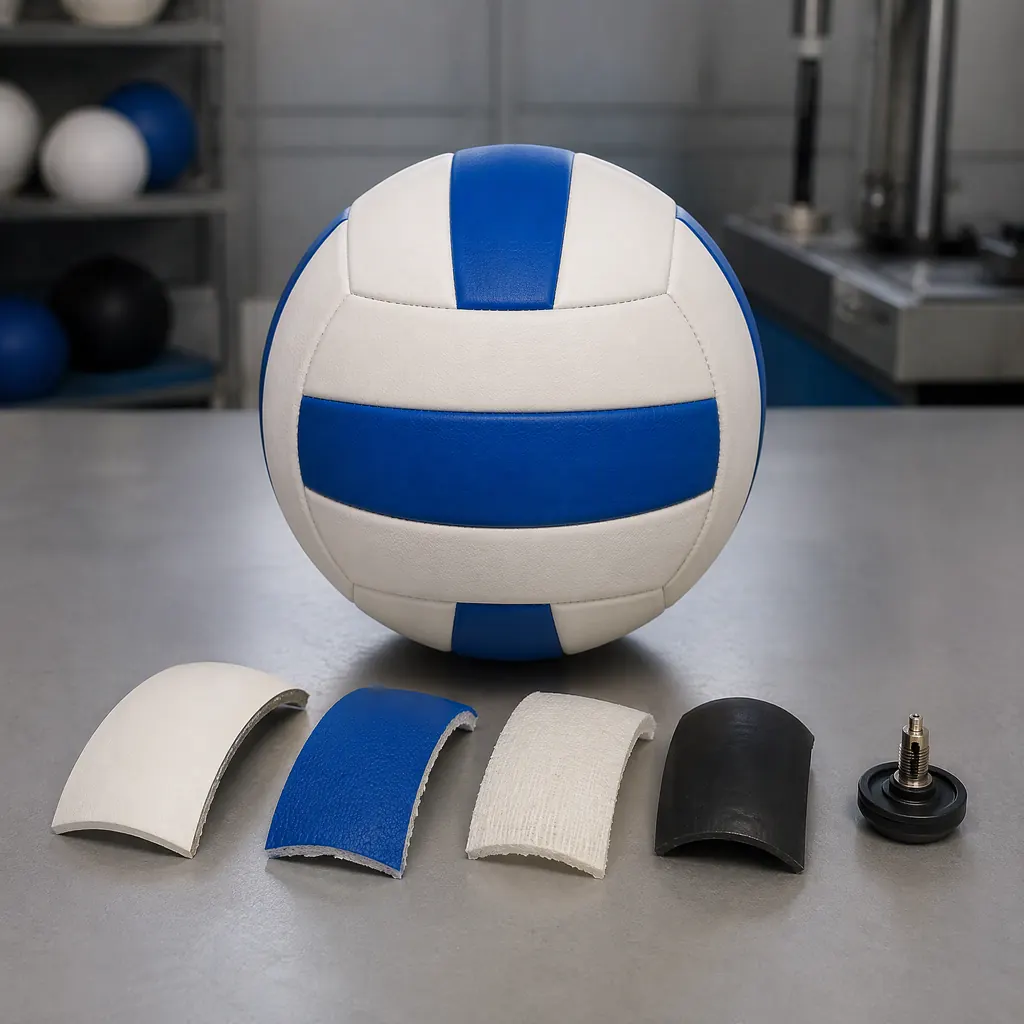
Volleyball construction is the combination of the outer cover, panel layout, seam or bonding method, backing layers, lining, bladder, valve, and inflation condition. These parts work as a system. The cover provides the primary contact surface, while the layers beneath it influence firmness and recovery. The bladder holds air and contributes to shape and rebound. The panel structure distributes tension around the sphere and affects how the ball behaves at different contact points. A complete volleyball construction review should therefore record every layer instead of recording only the visible cover.
When a factory changes one element, the playing feel can change even if the visual design remains similar. A different backing may make the cover feel firmer, bonding may alter seam transitions, and a different bladder may affect rebound or air retention. Buyers should record the full volleyball construction used in the approved sample and require change control before substitutions.
Panel design and contact consistency
Panel design determines how the cover is divided and how contact areas transition across the ball. Panel shape, size, curvature, and alignment influence the location of seams and the amount of surface available for the hands or forearms. A well-controlled volleyball construction layout helps the ball feel consistent when players contact different areas during a rally. Uneven panel tension can create visible distortion or different touch between adjacent sections.
During sample approval, rotate the inflated volleyball slowly and inspect panel alignment under consistent lighting. Look for raised edges, panel steps, wrinkles, uneven gaps, or areas where the cover appears stretched. Then compare passing and setting across several orientations. Panel design should be reviewed with artwork because printing and color blocks can make alignment defects more visible. A production reference should show both the preferred volleyball construction layout and the expected contact feel.
Bonding, stitching, and seam transitions
Bonding and stitching create different construction conditions. Bonding can produce a smoother exterior when the process is well controlled, while stitching can offer a distinct structural approach and visible seam character. Neither method is automatically best for every volleyball. The choice should match the cover, backing, target price, use environment, and quality requirements defined by the buyer. In a volleyball construction comparison, the method should be judged by the complete sample rather than by process terminology alone. The selected volleyball construction must also remain stable during repeated handling and cleaning.
Seam transitions influence how the ball responds when it contacts the arms, hands, or fingers. Inspect whether seams are even, secure, clean, and free from exposed adhesive or loose thread. Run a hand across several panels and compare the transitions with the approved sample. If the ball is intended for frequent training, include repeated handling and cleaning in the review. A surface that feels smooth at first may develop raised edges or weakened bonding if the process is not stable.
Cover layers, lining, and firmness
The outer cover is only one part of the surface system. Backing and lining layers support the cover, distribute stress, and influence the firmness felt during contact. A thicker or denser support layer may create a more structured response, while a softer arrangement may produce a gentler touch. The appropriate balance depends on the player group and product position. In volleyball construction development, the layer combination should be approved together because changing one layer can change the final touch.
Bladder, inflation, and rebound response
The bladder is central to shape retention, air holding, and rebound behavior. A secure valve and stable bladder help the ball maintain its intended form during training and storage. Inflation level also changes the playing feel: a lower-pressure sample may feel softer, while a firmer inflation condition can produce a quicker response. Buyers should always compare volleyball construction samples at the same agreed inflation condition. The bladder should be included in the volleyball construction record because it can change both handling and rebound.
Check the valve area for secure bonding, smooth inflation, and signs of leakage. Examine roundness from several orientations after the ball has settled. Observe the rebound on a suitable indoor surface using a consistent release method. These checks do not replace a formal test standard, but they can reveal visible wobble, uneven response, or shape instability. Record the inflation method with the sample so later production lots can be compared fairly.
Surface texture, moisture, and grip
Surface texture affects how players control the ball during passing, setting, and serving. A fine texture may create a refined hand feel, while a more pronounced texture may provide stronger tactile reference points. The cover material, coating, panel structure, and moisture condition all contribute to the result. A volleyball construction that feels controlled when dry may respond differently after perspiration or cleaning, so the complete construction should be reviewed under more than one handling condition. This is why volleyball construction approval should include dry, damp, and cleaned-surface observations when those conditions reflect actual use.
Matching construction to product use
Training, club, school, and premium indoor programs may require different construction priorities. A training ball may emphasize durability, stable shape, manageable cost, and easy care. A club product may balance touch, consistency, and repeated use. A premium range may focus on refined surface response, panel precision, visual finish, and a more controlled material story. The volleyball construction brief should state which priorities matter most before sampling begins. A clear brief prevents the supplier from optimizing for durability when the buyer actually needs a softer playing feel.
B2B construction approval checklist
- Record the complete volleyball construction: cover, backing, lining, panel layout, bonding or stitching, bladder, valve, and inflation condition.
- Document every volleyball construction change and require approval before substituting materials or processes.
- Inspect panel alignment, seam transitions, roundness, texture, artwork, and surface uniformity.
- Compare touch, grip, passing, setting, serving, rebound, and shape stability using the same method.
- Review the ball after representative handling, cleaning, storage, and reinflation.
- Approve a physical construction sample and define material and process change controls.
- Keep the approved sample, inspection record, artwork, and packing specification traceable to the order.
Repeat-order construction record
For repeat orders, retain one approved volleyball construction record with the purchase order. It should identify the cover, backing, lining, panel layout, seam method, bladder, valve, inflation, artwork, and inspection notes. This gives purchasing and quality teams the same reference when approving a replacement sample or reviewing a change.
- Volleyball construction cover: record material, finish, texture, and tactile response.
- Volleyball construction seams: record bonding or stitching and transition quality.
- Volleyball construction bladder: record valve position, inflation, and shape retention.
- Volleyball construction inspection: record defects, corrective action, and recheck results.
- Volleyball construction change control: require written approval before substitutions.
Use the volleyball construction record at every handoff. Purchasing checks the volleyball construction specification, quality checks the volleyball construction inspection method, and product teams check the volleyball construction playing feel. Packaging checks the volleyball construction reference against labels and care instructions. A shared volleyball construction record makes a volleyball construction change visible before production. It also keeps the volleyball construction sample, volleyball construction artwork, volleyball construction material, volleyball construction process, volleyball construction bladder, volleyball construction inflation, volleyball construction surface, volleyball construction seam, volleyball construction panel, volleyball construction grip, and volleyball construction approval connected to the same order.
Conclusion
Volleyball construction changes playing feel because every layer and process contributes to contact response, stability, grip, and rebound. Panel design controls surface transitions, bonding or stitching shapes seam behavior, backing and lining influence firmness, and the bladder affects inflation and shape. For B2B buyers, the safest method is to compare complete physical samples under consistent conditions and record the volleyball construction behind the preferred feel. A controlled volleyball construction specification and repeatable inspection plan make it easier to deliver consistent volleyballs across future production runs.