
 EN
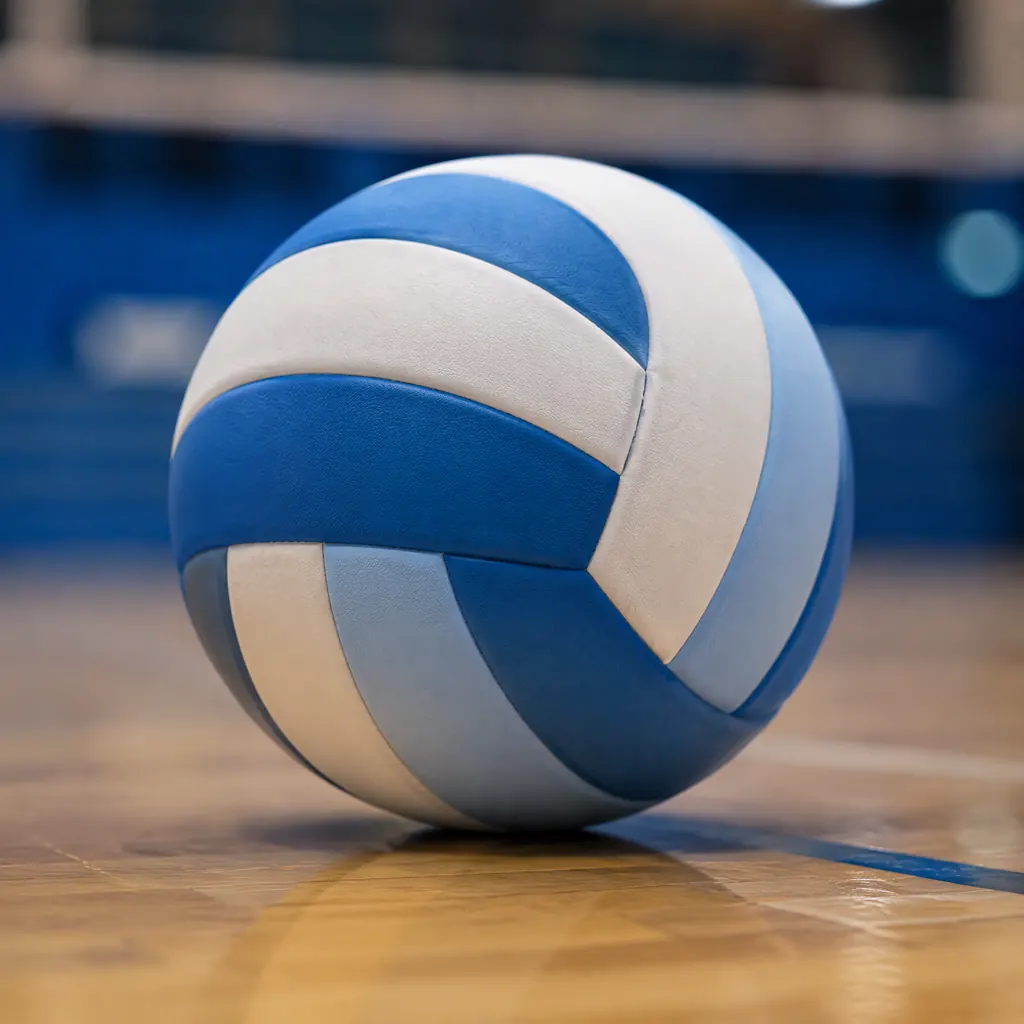
Indoor Volleyball Materials: PU, TPU, or Microfiber?
Indoor volleyball materials shape the first-contact feel, surface grip, moisture response, durability, and price position of the finished ball. PU, TPU, and microfiber covers can all be developed for indoor training or competition-oriented programs, but they do not create the same handling experience. For B2B buyers, the best choice depends on the court environment, player group, usage frequency, cleaning routine, custom requirements, and expected product life.
Material selection should not be based on a label alone. A supplier can change the coating, backing, texture, panel construction, and surface treatment within the same broad material category. Buyers should therefore compare physical samples made with production-intent materials and evaluate touch, shape stability, moisture handling, visual finish, and consistency. This guide compares the main indoor volleyball materials and explains how to convert a material preference into a practical sourcing specification.
Why cover material matters for indoor volleyball
The cover is the player's main point of contact with the ball. It influences how the surface responds during a serve, set, pass, block, or defensive reception. For indoor volleyball materials, this contact response is often the first difference a buyer notices during sampling. A softer cover may feel comfortable during repeated training, while a firmer or more structured cover may provide a clearer response during fast contact. The internal bladder, lining, panel layout, and inflation also affect the result, so the cover should always be reviewed as part of the complete construction.
Indoor courts usually create a cleaner environment than outdoor surfaces, but indoor use still exposes the ball to sweat, dust, floor contact, repeated wiping, and frequent handling. A material that feels excellent when new may become polished or slippery if the coating does not tolerate the care routine. When comparing indoor volleyball materials, buyers should assess both the immediate hand feel and the expected surface behavior after representative use.
PU volleyball covers: soft touch and flexible positioning
PU covers are widely considered when buyers want a balanced combination of softness, touch, appearance, and cost control. A PU surface can be formulated with different textures and coatings, allowing a supplier to position the ball for school programs, club training, recreational distribution, or a more refined indoor range. The actual result depends on the formulation, thickness, backing, panel treatment, and finishing process.
For procurement, do not treat every PU volleyball as equivalent. Compare the surface after inflation and handling, inspect texture uniformity across panels, and review whether the cover keeps its intended feel after cleaning. Ask the supplier to identify the PU construction used in the approved sample and to control the same material during bulk production. In an indoor volleyball materials comparison, PU can be a practical choice when the program needs comfortable touch and broad design flexibility without moving immediately into a higher-cost specification.
TPU volleyball covers: durability and surface control
TPU is often considered when a buyer prioritizes toughness, controlled surface performance, and resistance to repeated handling. Depending on the formulation and construction, a TPU cover can support a more structured feel and stable visual finish. It may also be suitable for training programs that need a ball to withstand frequent practice, storage, and cleaning, although the final performance still depends on the complete product design.
When reviewing TPU indoor volleyball materials, focus on flexibility, surface texture, bonding, panel transitions, and touch during repeated contact. A cover that is too firm or too smooth may not meet the intended handling preference, even if it appears durable. Test the sample under the actual inflation condition and compare it with the approved reference. TPU is most useful when durability and surface stability are important, but the supplier must still match the material to the desired level of softness and control. This makes TPU a clear option to compare within the wider indoor volleyball materials decision.
Microfiber volleyball covers: refined feel and moisture response
Microfiber covers are often selected for premium indoor programs because they can provide a soft, refined hand feel and a distinctive surface texture. The material structure can support a controlled touch when players repeatedly contact the ball. For buyers targeting clubs, tournament-related training, or higher-positioned product lines, microfiber may offer a useful way to differentiate the ball from basic synthetic covers.
Microfiber requires careful evaluation because the surface treatment and backing strongly influence performance. Check whether the texture remains consistent across panels, whether moisture changes the grip, and whether repeated wiping affects the finish. Also inspect color stability, edge quality, bonding, and resistance to surface marking. Among indoor volleyball materials, microfiber may provide a premium impression, but it should be approved through physical testing rather than through product descriptions alone. Its value should be judged against the buyer's use case, not only against a premium label.
Comparing touch, grip, and moisture handling
A useful material comparison should separate touch from grip. Touch describes the softness, feedback, and comfort felt during contact. Grip describes how securely the hands can control the ball during passing, setting, and defensive play. A very soft cover is not automatically the most controllable, and a durable cover is not automatically too hard. Texture, coating, inflation, player technique, and moisture all influence the final response.
For a B2B sample review, use a consistent handling sequence. Compare a dry-hand pass, a controlled set, a serve reception, and repeated contact after light perspiration or cleaning. Observe whether the surface becomes slick, whether the texture collects contamination, and whether the ball remains predictable across different panels. Document the result using the same language for every sample. This makes indoor volleyball materials easier to compare across suppliers and avoids relying on vague claims such as professional feel.
Construction factors beyond the cover
Cover material cannot compensate for weak construction. Panel geometry affects the visible shape and contact transitions. Bonding or stitching affects seam continuity and long-term appearance. The lining can influence stability, while the bladder affects inflation retention and rebound response. Valve quality matters because repeated inflation can damage the product if the valve is poorly positioned or insecurely bonded. These construction details should remain part of any indoor volleyball materials approval, even when the cover itself meets the requested specification.
During approval, review the complete ball rather than asking the factory to quote only a material name. Check roundness, weight, circumference, inflation, panel alignment, surface uniformity, and artwork. If the supplier changes the backing or adhesive while keeping the same cover label, the handling result may change. The sourcing specification should therefore identify the cover, supporting layers, construction method, and inspection points that define the approved product.
Matching material to training and competition programs
The right indoor volleyball materials depend on the business use case. School and community programs may prioritize manageable cost, easy care, and dependable durability. Club training programs may need a balance of touch, repeated-use resistance, and stable inflation. Premium buyers may place greater value on refined feel, surface consistency, and a distinctive material story. None of these priorities is universal, so the product brief should state the intended user and operating conditions before sampling.
Consider the replacement cycle and distribution environment as well. A material that performs well in a controlled club may need different packaging or care guidance when sold through schools, retailers, or institutional buyers. Explain whether the ball is intended for indoor training, organized play, or general recreation. Clear positioning helps buyers choose between PU, TPU, and microfiber without promising identical performance across every program.
B2B sourcing checklist for indoor volleyball materials
- Define the player group, court environment, usage frequency, price position, and cleaning routine for the selected indoor volleyball materials.
- Identify the cover material, coating, texture, backing, panel construction, bladder, and valve.
- Request production-intent samples rather than evaluating a catalog image or material name alone.
- Compare touch, grip, moisture response, surface uniformity, roundness, weight, and inflation retention.
- Review artwork, color, seam quality, bonding, packaging, and traceability for repeat orders.
- Approve a physical reference sample and define change-control requirements before bulk production.
Conclusion
PU, TPU, and microfiber can all be viable indoor volleyball materials when the formulation and construction match the intended use. PU may support flexible positioning and comfortable touch, TPU can support durability and surface stability, and microfiber can provide a refined premium feel. The safest B2B decision is to compare physical samples under consistent handling, moisture, cleaning, and inflation conditions. By linking the material choice to a written indoor volleyball materials specification and repeatable inspection plan, buyers can build a more reliable volleyball range and reduce avoidable quality disputes.