
 EN
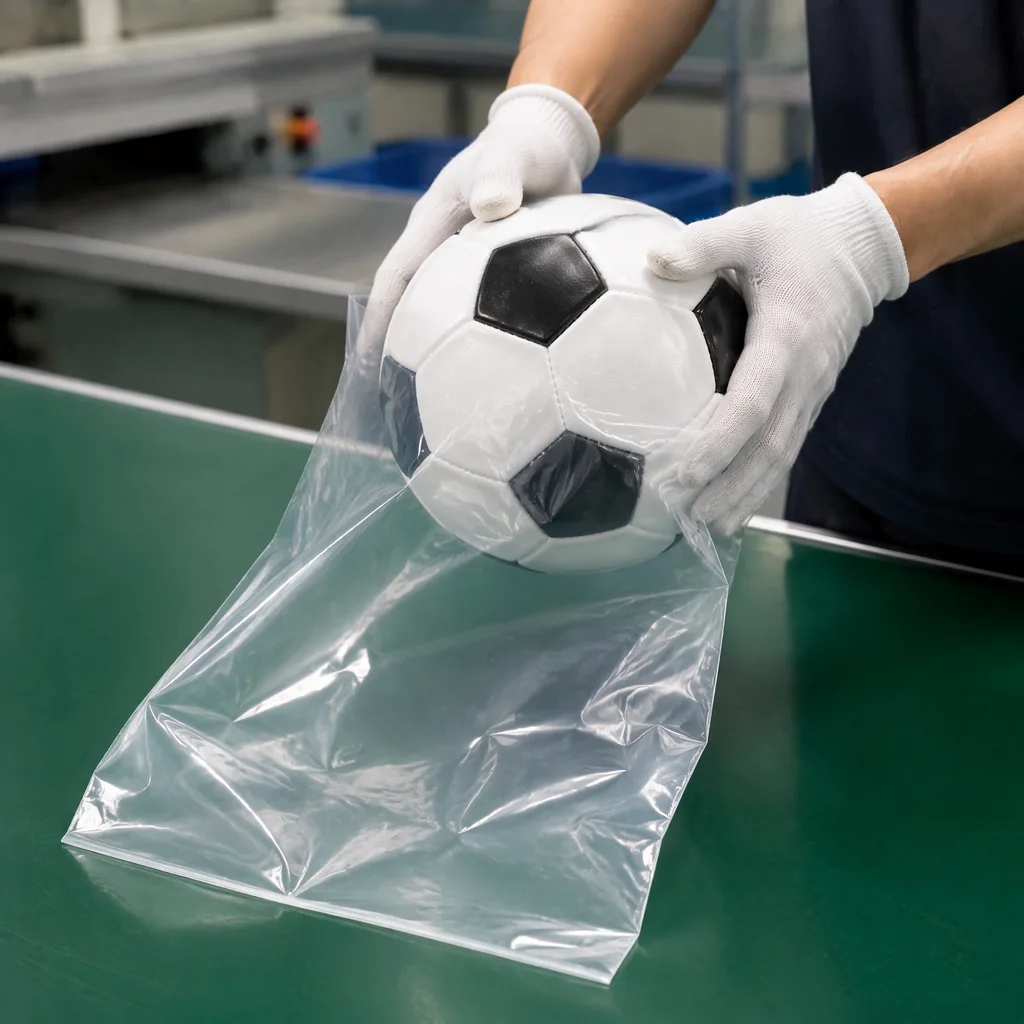
Export Soccer Ball Packaging: Carton Planning, Protection, and Loading Checks
Export soccer ball packaging affects landed cost, product condition, warehouse efficiency, and the buyer’s ability to receive a shipment without disputes. A ball can be well manufactured and still arrive with crushed cartons, scuffed graphics, moisture marks, or incorrect quantities if packaging is planned too late. B2B buyers should review export soccer ball packaging while the product is being sampled, because carton dimensions and inflation condition influence the full logistics plan.
Begin with the shipping profile
Identify the destination, transport modes, storage period, climate, pallet standard, and final sales channel. A direct container shipment to a distributor may require different carton strength from a mixed shipment that will be handled several times by a forwarder. Ask whether the balls will be shipped inflated, partially inflated, or flat. The answer affects carton volume, deformation risk, and the number of units that fit in a container.
Also determine whether the packaging will be opened in a warehouse, school, retail store, or e-commerce fulfillment center. A carton that is efficient for export may not be convenient for local distribution. Export soccer ball packaging should protect the product while supporting scanning, counting, and safe manual handling.
Carton size and material selection
Carton dimensions should be based on the actual finished ball and the approved inner arrangement. Avoid excessive empty space, which allows movement and increases freight volume. Avoid over-compression, which can deform balls and damage the outer surface. Use dividers, paper, or other protective material only when the risk assessment shows that it is necessary; extra inserts add cost and waste.
Specify board grade, flute, edge-crush performance, printing, closure method, and moisture resistance. A plain export carton may be suitable for a wholesale order, while a retail-ready master carton may need stronger graphics and handling marks. Ask for a loaded-carton sample so that corner strength and tape adhesion can be evaluated before mass production.
Protection against pressure, impact, and moisture
Inflated balls can press against one another during transit. Use an arrangement that avoids sharp contact with valves, printed zones, and seams. If balls are packed at a reduced pressure, record the condition on the packing instruction and final inspection sheet. Do not let operators choose inflation condition from memory.
Moisture protection deserves attention in ocean freight and humid warehouses. Cartons should be stored off the floor, sealed properly, and protected from direct rain during loading. Desiccants or moisture barriers may be appropriate for specific routes, but they do not replace dry container practices. The buyer and supplier should agree on whether export soccer ball packaging includes these materials and how they are labeled for disposal.
Labels and documentation
Each master carton should show the purchase order, product code, color, size, quantity, gross and net weight, carton dimensions, country of origin, and handling marks required by the destination. Barcode placement must remain readable after taping and palletizing. If several designs are mixed in one shipment, use a packing list that clearly maps carton numbers to contents.
Check that carton labels match the commercial invoice, packing list, and purchase order. A quantity error at the carton level can delay customs clearance or create a receiving dispute even when the total shipment is correct. Take photographs of the first approved carton and retain a reference for repeat orders.
Container loading checks
Before loading, inspect the container for odor, water entry, holes, loose nails, and contamination. Confirm that the container is dry and that the floor can support the planned weight. Cartons should be stacked according to the approved pattern, with heavy products below lighter ones and enough support to prevent shifting. Do not place cartons where they can rub against exposed metal.
Record container number, seal number, loading time, carton count, pallet count, and photographs of the completed load. Check that the final row is braced if needed and that air circulation or desiccant placement follows the agreed plan. These simple records are valuable if cartons arrive wet, short, or visibly crushed.
Testing the packaging before launch
Perform a basic drop, compression, vibration, or handling test appropriate to the shipping route. Inspect both the master carton and the balls inside. A box can remain visually intact while internal movement damages seams or decoration. Repeat the test with the final print, tape, labels, and loaded weight. Approving a blank carton is not enough.
Conclusion
Reliable export soccer ball packaging connects product protection with freight efficiency and receiving control. Define inflation condition, carton structure, moisture measures, labels, and loading procedures before the first bulk run. A documented packaging standard reduces avoidable logistics claims and makes every future shipment easier to plan, inspect, and reorder.
Supplier checklist before booking freight
Before release, ask the supplier to confirm carton count, pallet count, loaded weight, seal procedure, and the person responsible for final verification. Review one opened carton from the finished lot and compare its contents with the packing list. Confirm that spare labels, care instructions, and retail inserts are packed only where approved. These small checks make export soccer ball packaging more dependable when a shipment passes between factory, forwarder, port, warehouse, and retailer. They also create a clear baseline for the next purchase order, especially when a new destination or freight route is introduced.