
 EN
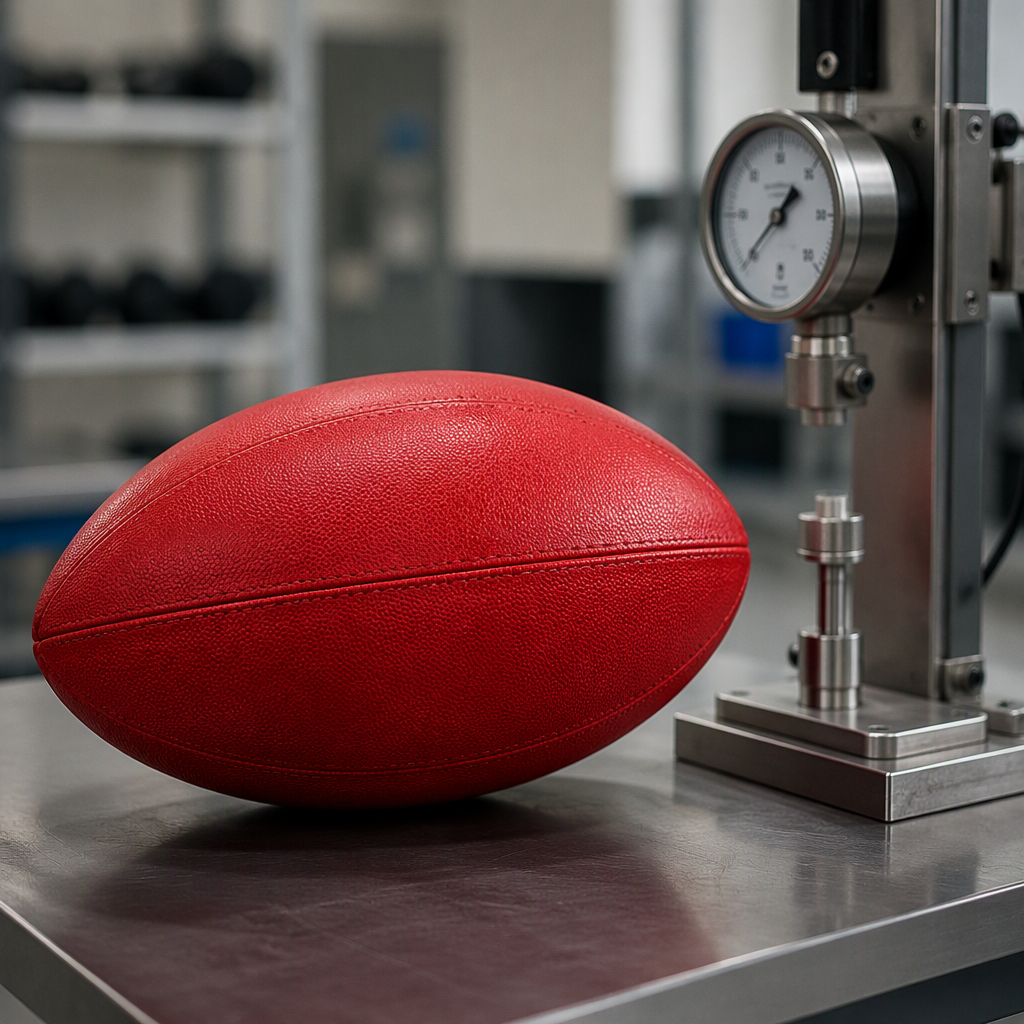
How Rugby Ball Internal Construction Affects Bounce and Handling
Rugby ball internal construction determines how an oval ball holds pressure, recovers after impact, and behaves in the hands and on the ground. The cover gets most of the visual attention, but the bladder, carcass, winding, valve, and adhesive layers establish the foundation for bounce and shape. For B2B buyers, defining rugby ball internal construction is necessary when a product must perform consistently across wet fields, training sessions, and repeat production.
The internal system inside an oval ball
The bladder contains the air and provides elasticity. Surrounding carcass or winding layers support the oval profile and spread impact forces. The valve must remain sealed through repeated inflation, while adhesives and panel joins keep the assembly together. Because the ball is not spherical, the internal structure must manage different stress levels along its length, width, and pointed ends.
A small variation in material thickness or winding tension can change the way the ball flexes. One ball may feel lively while another feels dull at the same pressure. A weak end can also affect shape retention and bounce direction. These differences are difficult to control without a written construction and testing standard.
How structure changes bounce
Rugby bounce is affected by pressure, surface, angle of impact, moisture, cover texture, and internal energy return. The carcass helps determine how quickly the ball deforms and recovers. If tension is uneven, the ball may kick off at an unexpected angle or show excessive variation between drops.
Testing should use a consistent release orientation and a marked impact area. Measure bounce after the ball has rested at the target pressure and temperature. Repeat drops on several axes and several samples. Include the final cover and seams because they alter the result. A bladder-only test can identify component behavior but cannot prove the performance of the finished rugby ball.
Shape retention and air stability
An oval ball must retain its profile after repeated passing, kicking, catching, and storage. Inspect circumference or length and width at defined points, then compare the ratios to the approved sample. Rotate the ball slowly to identify bulges, flat zones, or a pointed end that has become uneven.
Air retention depends on bladder material, valve bonding, temperature, and the integrity of the cover system. Use calibrated gauges and hold times. Repeat inflation and deflation for products sold to schools and clubs, where balls are serviced throughout a season. Record pressure loss and note any change in handling.
Balancing grip and internal response
The internal structure and outer cover interact. A softer carcass can make a ball comfortable to catch, while a firmer build may return energy quickly. The right target depends on the user and product category. A youth training ball may prioritize forgiving handling, while a match ball may require a more controlled response.
Test dry and damp conditions if the ball is intended for outdoor use. Moisture can change the surface grip and the apparent softness, but a reliable internal structure should still hold its shape and pressure. Include cleaning and storage guidance so that the buyer’s service expectations are realistic.
Supplier checks and technical questions
- What bladder material, wall thickness, and valve are used?
- How many carcass or winding layers support the oval profile?
- How is winding tension checked across production shifts?
- What pressure, bounce, and shape-retention tests are recorded?
- How are component substitutions controlled before a reorder?
The supplier should be able to answer these questions with a process description and actual records. A glossy catalog does not replace evidence of controlled rugby ball internal construction.
Repeat-order management
Freeze the internal specification with the approved sample, component codes, test methods, and tolerances. For each reorder, compare weight, pressure loss, bounce, shape, and valve performance with the baseline. A change in bladder source, thread, adhesive, winding machine, or curing condition should be reviewed before bulk production.
Keep failed samples when a test is missed and link them to a corrective action report. This creates a history that can show whether a problem is isolated or recurring. It also gives the factory a clear target for process improvement.
Conclusion
Reliable rugby ball internal construction supports predictable bounce, handling, air retention, and oval shape. Specify the bladder, carcass, winding, valve, and bonding as one system, then test the finished ball under the conditions of the market. B2B buyers who keep construction records and compare reorders against a baseline can build a rugby product line that performs with confidence on every field.
Storage and field-use guidance
Even a well-built internal system needs suitable care. Store rugby balls away from direct heat, sharp edges, and prolonged compression. Inflate them with the correct needle and avoid leaving them at an extreme pressure between sessions. For buyers supplying clubs, a short care card can protect the intended response and reduce false warranty claims. Record customer feedback about bounce and handling so future rugby ball internal construction decisions reflect actual field use.